
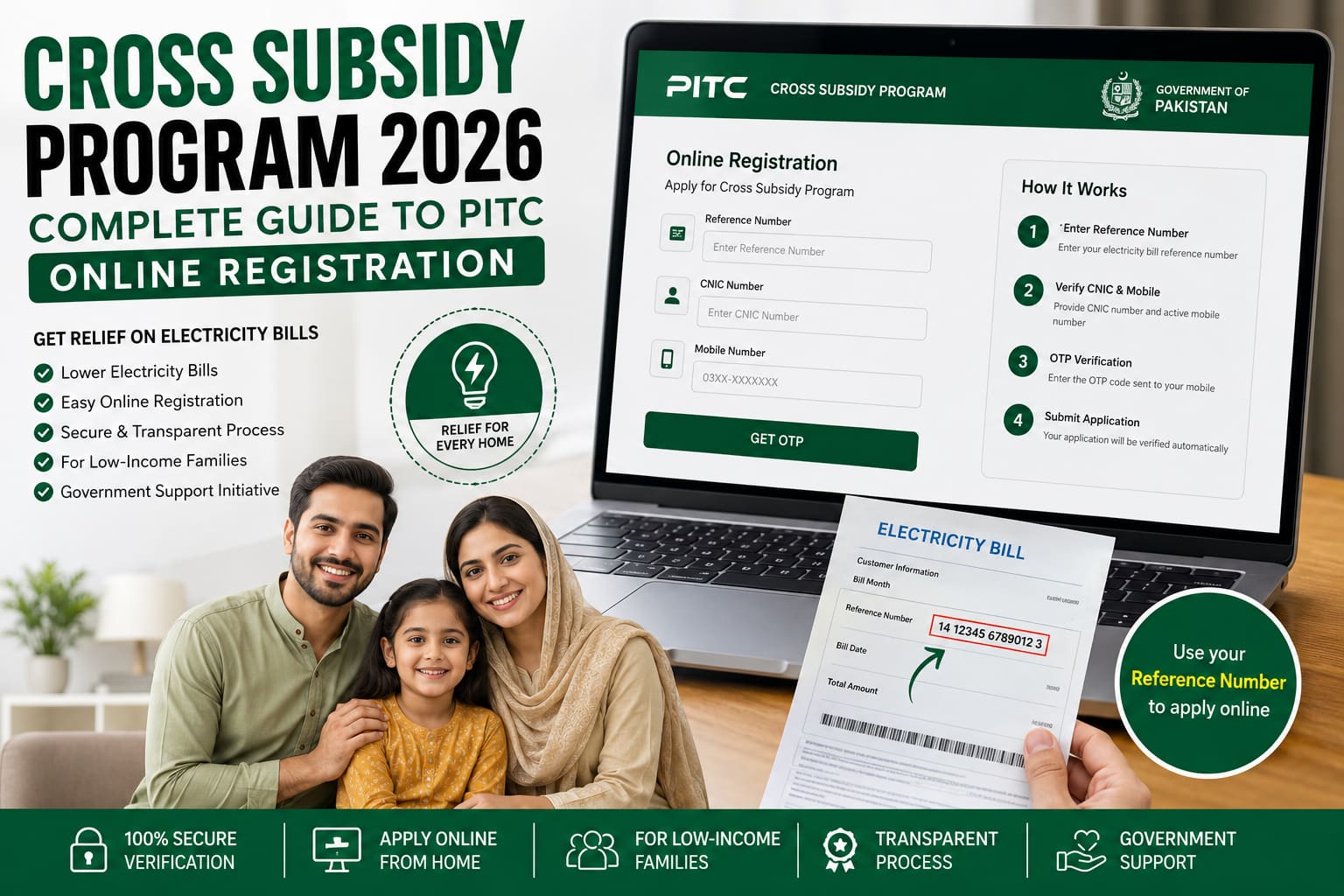
Cross Subsidy Program 2026 – Complete Guide to PITC Online Registration
Electricity bills in Pakistan continue to rise due to inflation, fuel price adjustments, and increasing energy demand. To provide relief to low-income households, the Government of Pakistan introduced the Cross Subsidy Program (CSS) through the Power Information Technology Company (PITC). This initiative is designed to ensure that deserving domestic electricity consumers receive subsidized electricity tariffs through a transparent digital verification system.
The PITC Cross Subsidy Portal allows eligible users to apply online using their electricity bill reference number, CNIC, and mobile number. The entire process is simple, secure, and can be completed from home without visiting any office.
This detailed guide explains everything about the Cross Subsidy Program 2026, including eligibility criteria, registration steps, required documents, benefits, verification methods, and common issues applicants may face during the application process.
What is PITC?
Power Information Technology Company, commonly known as PITC, is an organization that provides IT solutions for Pakistan’s power sector. PITC manages digital systems for electricity distribution companies (DISCOs) across the country.
The organization handles:
- Electricity billing systems
- Online bill checking services
- Consumer management systems
- Net metering solutions
- Digital customer support platforms
- Cross Subsidy Program registration portal
PITC plays an important role in improving transparency and digitization within Pakistan’s energy sector.
What is the Cross Subsidy Program?
The Cross Subsidy Program is a government-backed electricity relief initiative designed for low-income and low-electricity-consumption households. The main goal of this scheme is to provide subsidized electricity rates to deserving consumers while preventing misuse of protected tariffs.
In the past, some consumers misused subsidy systems by using multiple electricity meters to stay under protected tariff limits. The new CSS system uses CNIC verification and OTP authentication to identify genuine households and ensure that subsidies are distributed fairly.
This digital verification process helps the government target financial support toward consumers who truly need assistance.
Main Objectives of the Cross Subsidy Program
The program was launched with several important objectives:
1. Financial Relief for Low-Income Families
The scheme helps reduce the burden of high electricity bills for financially struggling households.
2. Fair Distribution of Subsidies
The system ensures that only eligible and deserving consumers receive government-supported electricity subsidies.
3. Prevention of Fraud and Misuse
Through CNIC verification and OTP confirmation, the system minimizes duplicate registrations and fake claims.
4. Digital Transparency
The online registration portal improves transparency and reduces manual errors in the subsidy distribution process.
5. Support for Protected Consumers
The initiative aims to support households with lower electricity usage through reduced electricity rates.
What is a Protected Electricity Tariff?
A protected tariff is a special electricity pricing category for domestic consumers who use limited electricity units each month. These consumers are charged lower per-unit electricity rates compared to regular consumers.
Generally, consumers using around 200 units or less may qualify for protected tariff benefits, depending on government policy and eligibility conditions.
Benefits of protected tariff may include:
- Lower electricity unit rates
- Reduced monthly bills
- Additional relief on fuel adjustments
- Lower fixed charges
This system is particularly beneficial for middle-class and lower-income households.
Who is Eligible for the CSS Program?
Not every electricity consumer automatically qualifies for the subsidy program. Eligibility depends on electricity consumption patterns and household verification.
The following categories are generally eligible:
Low Electricity Consumption Users
Consumers with low monthly electricity usage may qualify for subsidy support.
Low-Income Families
Households facing financial difficulties due to inflation and rising utility costs.
BISP Beneficiaries
Families registered under social welfare programs may receive preference during verification.
Domestic Consumers
The program is mainly intended for residential electricity users rather than commercial users.
Genuine Residential Households
Consumers using electricity for actual residential purposes are considered during eligibility checks.
Required Information for Registration
Applicants should keep the following information ready before starting the online registration process:
- Valid CNIC number
- Active mobile phone number
- Electricity bill reference number
- Consumer details
- Residential information
- Household verification details
Providing accurate information is extremely important because the system performs automated verification checks.
Where to Find the Electricity Bill Reference Number?
The reference number is printed on the electricity bill. It is usually located near the consumer details section at the top of the bill.
While entering the reference number:
- Enter all digits carefully
- Avoid spaces or special characters
- Do not confuse it with the consumer ID
Incorrect information can lead to application rejection or verification failure.
How to Apply for the Cross Subsidy Program Online
The PITC portal has simplified the registration process for consumers. The application process includes several easy steps.
Step 1 – Open the Official CSS Portal
Consumers must visit the official Cross Subsidy Program portal using a secure internet connection.
It is important to avoid fake websites, unofficial social media pages, or unknown WhatsApp links claiming to offer fast registration services.
Step 2 – Enter Electricity Reference Number
Applicants must enter their electricity bill reference number into the system.
The portal performs an initial verification to confirm whether the meter and consumer details are valid.
Step 3 – Provide CNIC and Mobile Number
After entering the reference number, users are asked to provide:
- CNIC number
- Mobile number
- Additional household information
The mobile number should remain active because the verification code will be sent through SMS.
Step 4 – OTP Verification
An OTP (One-Time Password) is sent to the registered mobile number.
Applicants must enter the OTP code correctly to complete identity verification.
This step improves security and prevents fraudulent registrations.
Step 5 – Submit the Application
Once all details are verified, applicants can submit the form online.
After submission, the system starts the eligibility verification process automatically.
Step 6 – Verification and Approval
The system checks:
- Electricity consumption history
- Consumer records
- CNIC authentication
- Household eligibility
- Welfare database information
If approved, the subsidy benefits may appear in future electricity bills.
How the CSS Portal Works
The portal has been designed for simplicity and ease of use. Consumers do not need advanced technical knowledge to apply.
The basic workflow includes:
- Reference number verification
- Consumer validation
- CNIC registration
- Mobile verification
- OTP authentication
- Final application submission
The system uses secure digital protocols to protect user information during the registration process.
Major Benefits of the Cross Subsidy Program
Lower Monthly Electricity Bills
The biggest benefit is reduced electricity expenses for deserving households.
Easy Online Registration
Consumers can apply from home without visiting electricity offices.
Secure Verification System
OTP and CNIC verification reduce fraud and duplicate registrations.
Transparent Process
The digital system improves fairness in subsidy distribution.
Relief During Inflation
The program supports families struggling with rising living costs.
Common Registration Mistakes
Many applications face delays due to small mistakes during form submission.
Common problems include:
- Incorrect CNIC number
- Wrong reference number
- Inactive mobile number
- Duplicate applications
- Incomplete information
- Using unofficial websites
Applicants should carefully review all information before submission.
What to Do if the Portal is Slow or Not Working
Sometimes the portal may become slow due to heavy traffic.
If this happens:
- Refresh the page
- Clear browser cache
- Try another browser
- Use stable internet connection
- Attempt registration during late-night hours
Avoid submitting the form multiple times unnecessarily.
How to Check Application Status
Consumers can revisit the portal to track application progress.
It is recommended to save:
- Application screenshots
- Confirmation messages
- Reference numbers
These details may help in future support or verification requests.
Is Registration Free?
Yes, registration for the Cross Subsidy Program is completely free.
Consumers should avoid agents or individuals demanding payment for registration or guaranteed approval. The official system does not charge any fee for application submission.
Electricity Distribution Companies Covered Under CSS
The Cross Subsidy Program is available for consumers connected to multiple electricity distribution companies across Pakistan, including:
- FESCO
- LESCO
- MEPCO
- IESCO
- GEPCO
- PESCO
- HESCO
- SEPCO
- QESCO
- TESCO
- HAZECO
Consumers from these DISCOs may apply through the PITC portal if they meet eligibility conditions.
Security Tips for Applicants
Consumers should follow basic online safety precautions while using the registration portal.
Important Safety Guidelines
- Use only the official PITC portal
- Never share OTP codes with anyone
- Avoid fake registration agents
- Do not trust unofficial social media pages
- Double-check website authenticity before entering personal information
These precautions help protect applicants from fraud and scams.
Importance of the CSS Program in Pakistan
Electricity affordability has become a major issue for many households in Pakistan. Rising utility costs directly affect the financial stability of middle-class and lower-income families.
The Cross Subsidy Program helps by:
- Supporting vulnerable households
- Improving energy affordability
- Reducing financial pressure
- Enhancing subsidy transparency
- Ensuring fair distribution of government relief
The digital verification system also strengthens trust in the subsidy process.
Future of Digital Utility Systems in Pakistan
Pakistan’s power sector is rapidly moving toward digital transformation. PITC continues to introduce modern online services to improve customer experience and operational efficiency.
Future improvements may include:
- Smart electricity billing
- Mobile applications
- Real-time subsidy tracking
- Automated consumer verification
- AI-based electricity management systems
The Cross Subsidy Program is an important step toward a more transparent and digitally connected energy sector.
Final Words
The Cross Subsidy Program 2026 is an important relief initiative for low-income electricity consumers in Pakistan. Through the PITC online portal, eligible households can easily apply for subsidized electricity support from home.
The registration process is simple, secure, and designed to ensure that subsidies reach deserving families through proper verification methods. Consumers should provide accurate information, use official platforms only, and complete OTP verification carefully.
As electricity prices continue to increase, programs like CSS can play a major role in helping households manage their monthly utility expenses while improving fairness and transparency in subsidy distribution.